
.png)
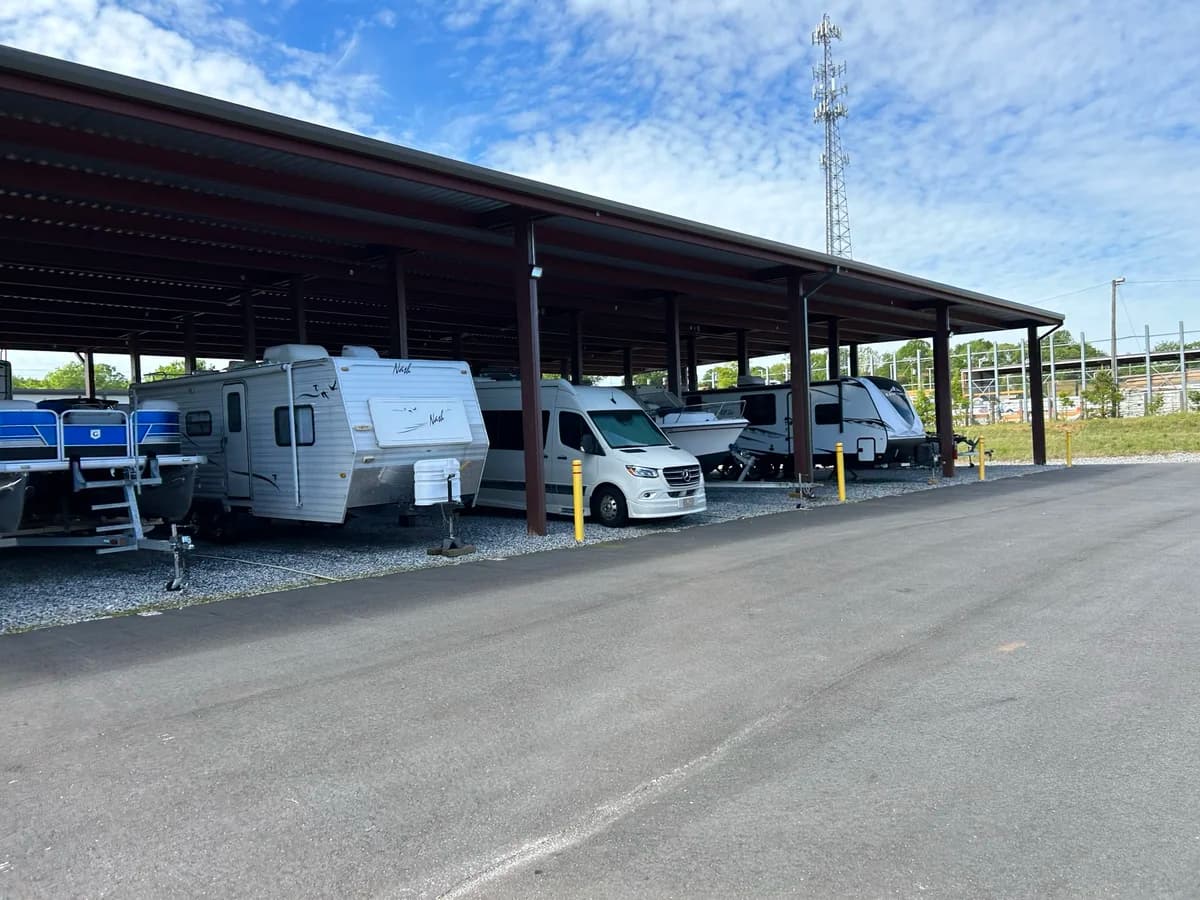
Boat Storage
Self Storage Units For Boats and Watercraft
Boat and Watercraft Storage
Owning a boat brings endless opportunities for recreation and relaxation—but finding the right place to store it when it’s not in use can be a challenge. Parking your boat or trailer at home isn’t always an option due to HOA restrictions, limited space, or exposure to the elements. Using professional boat storage helps protect your investment from weather damage, theft, and unnecessary wear and tear.
At 10 Federal Storage, we make boat storage simple. With secure facilities, easy access, and multiple storage options, you can enjoy your time on the water without worrying about where to keep your vessel when the season ends.
Whether you own a fishing boat, pontoon, jet ski, kayak, canoe, or personal watercraft, our storage facilities provide the ideal solution to keep your equipment safe, protected, and ready for your next adventure.
Here's how to measure for a space, what to do to the boat before it sits, and what our facilities don't provide.
Why Boat Owners Rent Dry Storage
- Marina slips are expensive and seasonal. Dry storage is typically a fraction of a wet slip, and a boat out of the water isn't growing anything on its hull.
- HOA and street parking rules. A boat on a trailer in the driveway is prohibited in a great many communities.
- Driveways are finite. A 22-foot bowrider on a trailer is roughly the footprint of a large pickup, and it doesn't move for months at a stretch.
- The off-season is long. In most of our markets a boat is genuinely usable for maybe five months a year.
- Security. Outboards and electronics are theft targets. A gated lot with cameras and coded entry is a meaningful improvement over the street.
Sizing a Space for a Boat on a Trailer
Don't use the boat's advertised length
A "21-foot" boat on a trailer is routinely 26 or 27 feet of actual footprint. The advertised number is hull length, usually centerline and often excluding the swim platform. What you need is the length of the whole rig.
Measure from the tip of the trailer coupler to the furthest rearward point — which is usually the outboard with the engine tilted up, or the swim platform, whichever sticks out further. Then add five feet for maneuvering.
Watercraft | Typical rig length | Space or unit to look for |
|---|---|---|
Kayak, canoe, or paddleboard | 9–17 ft | 5x10 or 10x10 enclosed unit. Store on edge or on a rack, never flat under weight. |
Single jet ski on a trailer | 12–15 ft | 10x20 enclosed unit, or a standard outdoor space |
Double jet ski trailer | 15–18 ft | 10x20 to 10x30, or an outdoor space |
Jon boat or small fishing boat | 16–21 ft rig | 25 ft outdoor space, or a 10x30 unit at the short end |
Bass boat | 22–27 ft rig | 30 ft outdoor space |
Bowrider or runabout | 23–30 ft rig | 30–35 ft outdoor space |
Pontoon | 25–33 ft rig | 30–40 ft outdoor space. Check width — pontoons are wide for their length. |
Cabin cruiser or wake boat | 28–38 ft rig | 35–45 ft outdoor space. Check height with the tower up or plan to fold it. |
Available space lengths vary by location.
Also measure
- Width at the widest point, including trailer fenders and any rub rail. Pontoons and wide-beam boats are the usual surprise.
- Total height on the trailer, including a wakeboard tower, radar arch, or Bimini frame. Some fold, some don't. This governs gate clearance as well as enclosed-unit fit.
Your Two Options
Outdoor Parking Spaces
An assigned space in the gated lot. How nearly all trailered boats are stored.
- Accommodates any trailered boat that fits the space
- Straightforward to back in and pull out
- Lowest cost per foot
- Boat stays exposed to sun and weather, so a good cover matters
Drive-up Enclosed Units
A standard unit with a roll-up door. Realistic for smaller watercraft rather than full-size boats.
- Out of direct sun and rain, and out of sight
- Ideal for kayaks, canoes, paddleboards, and jet skis
- Room for gear, life jackets, and skis alongside
- Door width and height limit what fits
- Higher cost than an outdoor space
Preparing a Boat for Storage
An outdoor space doesn't prevent freeze damage
Worth stating plainly, because this is where the expensive mistakes happen. A gated parking space protects against theft and clears your driveway. It doesn't keep water in a block or an outdrive above freezing. If your boat will sit through freezing weather, it needs winterizing regardless of where it's parked.
Before you leave the ramp
- Pull the drain plug and leave it out, with the bow raised so the bilge drains completely. Rainwater collecting in a hull over a winter is a common and avoidable problem.
- Flush the engine — essential after saltwater use, good practice after fresh. Do this before you leave the ramp or at home, because our facilities have no water hookup and flushing isn't possible on site. [CONFIRM.]
- Wash the hull and let it dry, for the same reason. Salt left on a hull and trailer over a season does real damage.
Engine and fuel
- Fill the fuel tank and add stabilizer, then run the engine to circulate treated fuel through the whole system. Ethanol-blend fuel phase-separates over months, and a full tank leaves less room for condensation.
- Fog the cylinders on a two-stroke, or follow your manufacturer's layup procedure for a four-stroke.
- Change the engine oil and filter before the sit, not after.
- Change the lower unit gear oil. This one doubles as diagnosis — milky gear oil means water intrusion and a seal that needs attention before spring.
- Drain all raw water from the block, manifolds, and outdrive on an inboard or sterndrive, or run antifreeze through per your manual.
- Tilt the outdrive or outboard fully down for storage so water drains out rather than sitting in the gearcase.
- Grease all fittings and lubricate steering and throttle cables.
Batteries, electronics, and interior
- Remove the batteries. Our spaces and units aren't powered, so a maintainer isn't an option on site. Take them home where you can keep them charged — a marine deep-cycle battery left flat all winter usually doesn't recover.
- Take removable electronics with you. Fishfinders, GPS units, and radios are the first things a thief goes for and they aren't happy sitting through temperature swings anyway.
- Clear out everything else. Food, drinks, life jackets, towels, and anything damp. Food attracts pests; damp gear left in a closed compartment causes its own problems.
- Prop compartments, coolers, and the head open so air can move through them.
- Clean and protect the upholstery with a vinyl protectant. Sun is what kills boat seats.
Covers and shrink wrap
- Use a proper fitted cover with support poles. The poles matter more than the cover — without them water pools, and a pool of water becomes weight, and weight tears covers and stretches snaps.
- Not a tarp. Tarps chafe gelcoat, trap moisture against the hull, and shred in the first real wind.
- If you shrink-wrap, insist on vents. Wrap without ventilation seals a boat up completely and creates exactly the conditions you're trying to avoid. [CONFIRM: whether shrink-wrapped boats are permitted in outdoor spaces.]
Don't forget the trailer
The trailer is the part that gets neglected, and it's the part that strands you on the way to the water in May.
- Inspect and repack the wheel bearings. Bearings that have been submerged repeatedly are the single most common trailer failure.
- Inflate the tires to sidewall pressure and cover them. Trailer tires almost always age out before they wear out, and UV is what ages them.
- Take weight off the springs with jack stands if the boat will sit for a full season.
- Check the bunks and rollers for worn carpet or cracked rollers pressing into the hull. A worn bunk leaves a mark over a winter of constant pressure.
- Test the lights and clean the connector before you store it, not the morning you're leaving for the lake.
- Chock the wheels and lock the coupler. A coupler lock is cheap and it's the main thing standing between a thief and a boat that rolls.
Storing Kayaks, Canoes, and Paddleboards
Small watercraft go in an enclosed unit rather than a parking space, and a few habits keep hulls straight:
- Never store them flat with weight on top. Polyethylene kayak hulls deform under sustained pressure and the dent may not come back out.
- On edge or on a rack is best, supported at the bulkheads rather than at the middle of the hull.
- Loosen the straps on any rack. Tight straps over months create the same dents.
- Rinse and dry completely, and leave hatches open.
- A 5x10 handles most single kayaks standing on end or racked; a 10x10 comfortably takes several plus paddles, PFDs, and gear.
What You'll Need to Rent
- Current registration. Proof of current registration is required for the trailer, and for the vessel where your state registers it separately.
- Proof of insurance. The boat must be insured, and you'll need to provide proof of coverage. [CONFIRM: whether a minimum coverage level is specified in the lease, and whether trailer-only coverage is sufficient.]
- No fluid leaks from the engine or the trailer.
- One party per rental. Each space or unit is leased to exactly one party, who holds the access credentials and remains responsible for what's stored there.
What Our Facilities Don't Offer
- No water hookup, washing, or engine flushing. Wash and flush before you arrive.
- No launch, ramp, or water access. We're dry storage, not a marina.
- No electrical hookups. No battery maintainers, no charging.
- No maintenance, winterizing, or shrink-wrap service. No repairs or fluid disposal on site.
- No staff to spot you backing in. Our facilities are unstaffed. Drive aisles are laid out wide enough to maneuver a trailer solo, but bring your own spotter if you want one.
- The tow vehicle needs its own space. If you want to leave the truck too, that's a second rental. See vehicle storage, or RV and trailer storage if you're storing a camper alongside the boat.
Why an Automated Facility Suits Boat Storage
- Nearly all locations offer 24/7 gate access. Fishing starts before dawn and ends after dark. Neither of those is inside anyone's office hours, and this is probably the strongest practical argument for our model in this whole category.
- Rent online at any hour, including the evening the season ends.
- Month-to-month terms. Store October through April and stop when the water warms up.
- Wide drive aisles sized for maneuvering trailers.
- Support is remote, handled by our customer support team by phone and online.
Boat Storage FAQs
Measure the whole rig — from the tip of the trailer coupler to the furthest rearward point, usually the outboard tilted up or the swim platform — then add about five feet. A boat advertised as 21 feet is commonly 26 or more feet of actual rig, because the advertised number is hull length only.
No. There's no water hookup available for washing or engine flushing at our facilities. Flush the engine and rinse the hull and trailer before you arrive — particularly important after saltwater use.
Yes, if it will sit through freezing weather. A parking space protects against theft and clears your driveway, but it doesn't keep water in a block or outdrive above freezing. Winterize exactly as you would anywhere else.
Out, with the bow raised so the bilge drains fully. Leaving the plug in lets rainwater accumulate in the hull over months, which adds weight and creates problems no cover will fix.
Usually yes. A single jet ski on a trailer typically fits a 10x20 drive-up unit, with room alongside for life jackets and gear. Check the door opening width and height for the specific unit before renting.
On edge or on a rack, supported near the bulkheads, never flat with weight on top — polyethylene hulls deform under sustained pressure and may not spring back. Rinse and dry them first, leave hatches open, and don't cinch rack straps tight for long-term storage.
Either works if it's done properly. A fitted cover needs support poles so water can't pool on it. Shrink wrap needs vents — sealing a boat up completely without ventilation causes its own problems. Avoid tarps entirely; they chafe gelcoat and shred in wind.
The tow vehicle needs its own space or unit. Storing both at one facility does mean one gate code and one trip when you're getting ready for the season.
Proof of insurance is required to store a boat with us, so you'll already have a policy in place. What it covers during off-season layup is worth checking separately — many marine policies have a specific storage provision, sometimes at a reduced rate. The protection plan required at checkout has a coverage ceiling well below the value of most boats, so it isn't a substitute for your own policy.
Every four to six weeks through a long layup. Look for pooling water on the cover, cover fasteners working loose, tire pressure loss, and any sign of pests. A cover that comes loose in a January storm can do more damage in one night than the whole rest of the winter.
Find Boat Storage Near You
Looking for boat storage near you? 10 Federal Storage makes it easy to reserve your space online in minutes. Whether you need short-term storage between trips or a long-term solution for the off-season, we’re here to help you keep your boat safe, clean, and ready for the water.