
.png)
Climate Controlled Storage
Protect Your Belongings From The Elements
Climate-Controlled Storage Units
We have all seen the kind of damage that extreme temperatures can do. Whether you left your ID card in the car during the summer and saw it melt or a small crack in your windshield grew and grew in the winter, witnessing the temperature damage important items is a frustrating experience. The worst part is that there is very little you can do about it. Sometimes the weather just causes problems.
Climate-controlled storage keeps your unit within a steady temperature range year-round, so the things you store aren't sitting through the same heat spikes and cold snaps as the outdoors. Here's what that actually protects, what it doesn't, and how to tell whether you need it.
What is Climate-Controlled Storage?
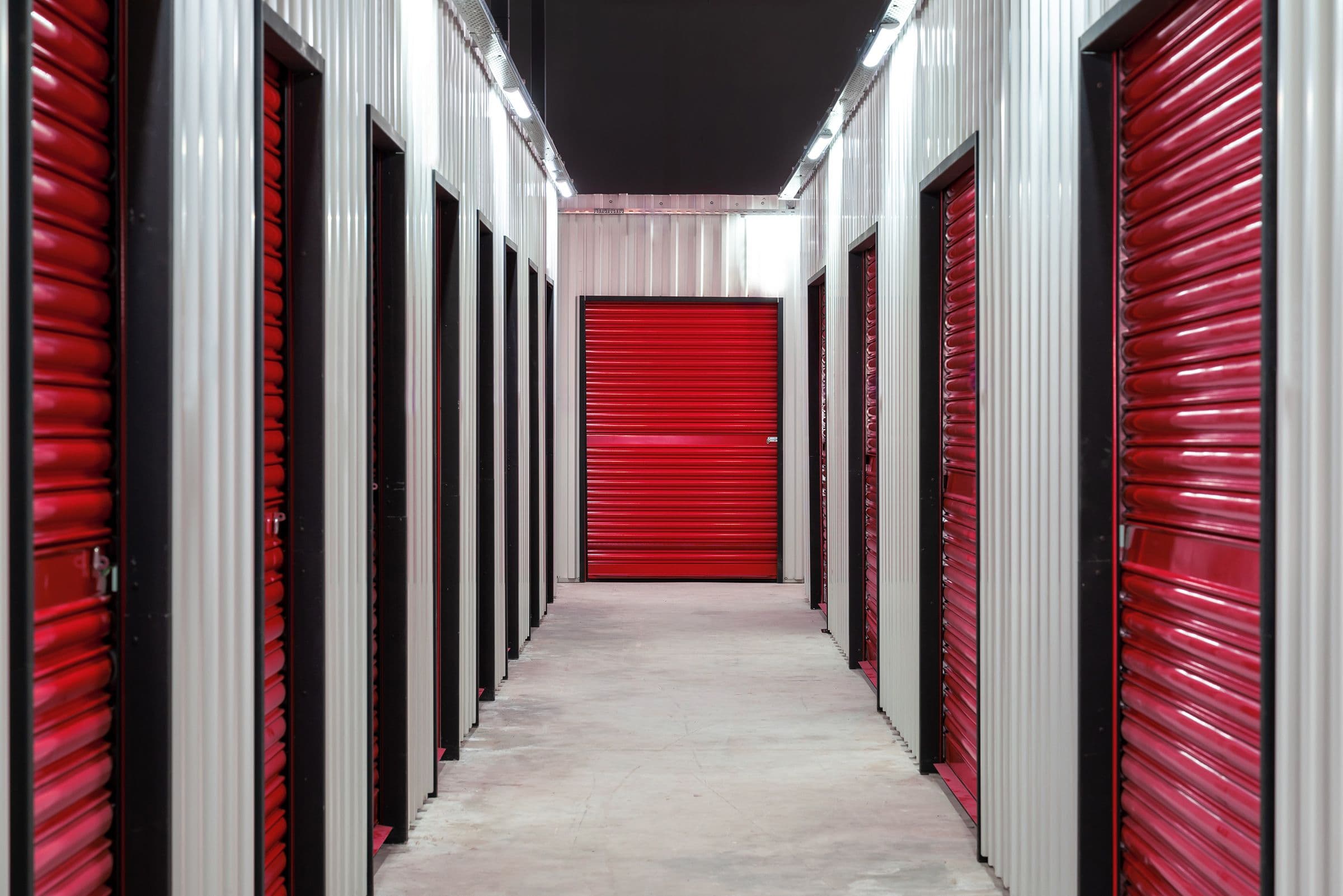
Climate-controlled storage is designed to protect temperature-sensitive items from extremes of heat and cold. A climate-controlled storage unit maintains a consistent temperature inside throughout the year by utilizing an air conditioning and heating system similar to the kind found in many modern houses.
This also protects against rapid changes in temperature as the units’ heating and cooling systems keep temperatures from fluctuating too much even when the weather changes. If you want to keep temperature-sensitive items in stable conditions, climate-controlled storage is the best choice.
A climate-controlled unit at 10 Federal Storage is held within a consistent temperature range throughout the year using heating and cooling equipment, much like the system in a house.
The point isn't a single comfortable number. It's stability. Most temperature damage to stored belongings doesn't come from heat or cold on its own — it comes from materials repeatedly expanding and contracting as conditions swing. A wooden dresser in an uninsulated garage might go from 40 degrees in February to 110 degrees in July, and then repeat that cycle every year. Glue joints loosen. Veneer lifts. Solid panels cup and split along the grain.
Climate control flattens that cycle. Your belongings sit in roughly the same conditions in August as they do in January.
Climate-Controlled vs. Standard Drive-Up Units
Both unit types are useful. They solve different problems, and plenty of customers rent one of each.
| Climate-Controlled | Standard Drive-Up |
|---|---|---|
Temperature | Held in a set range year-round | Tracks outdoor temperature |
Location | Interior, accessed through the building | Exterior, park at your door |
Loading | Carry or cart from the entrance | Back a truck right up to the roll-up door |
Dust and debris | Less exposure — inside a sealed building | More exposure at the door line |
Typical cost | Higher per square foot | Lower per square foot |
Best for | Furniture, electronics, instruments, documents, anything long-term | Tools, outdoor gear, patio furniture, seasonal decor, short-term overflow |
Availability of climate-controlled units varies by location.
What Benefits Most From Temperature Stability
Some categories are genuinely vulnerable to temperature swings. Others get grouped in by habit. Here's the honest breakdown.
Wood furniture and instruments
The clearest case. Wood moves with temperature and the moisture it carries, and repeated cycling works joints loose over time.
- Dressers, tables, headboards, bookcases
- Guitars, violins, pianos, wind instruments
- Antique furniture with hide glue joints
- Wood-framed upholstered pieces
Electronics
Heat degrades components and adhesives. Cold is hard on batteries and screens. Both matter more the longer the unit sits.
- TVs, monitors, and displays
- Computers, laptops, drives
- Cameras and lenses
- Audio equipment and speakers
- Game consoles and media
Media and paper
Vinyl warps at temperatures a car interior hits regularly. Paper and adhesives break down faster when cycled hot and cold.
- Vinyl records and magnetic tape
- Photographs and negatives
- Books and comics
- Business records and files
- Artwork on paper or canvas
Anything with wax, resin, or adhesive
The category people forget. Candles, vinyl records, laminated furniture, and taped photo albums all fail in the same way.
- Candles and wax goods
- Laminated or veneered furniture
- Vinyl and leather upholstery
- Glued or taped albums and scrapbooks
- Some cosmetics and personal care products
Things that usually don't need it
Metal shelving, hand tools, plastic bins of hardware, ceramic dishes, garden equipment, patio furniture, holiday decorations in sealed totes. These are fine in a standard drive-up unit and you'll pay less to store them there. Renting climate control for a garage cleanout is often money that could go toward a larger unit instead.
What Climate Control Does Not Do
Setting expectations properly matters more than making the feature sound impressive. Four things climate control will not do for you:
1. It is not dehumidification
Our climate-controlled units regulate temperature. They are not dehumidified units. Interior units in a sealed building generally see conditions closer to the inside of a house than to an open carport, but we don't control or guarantee a humidity level, and you shouldn't rent on that basis.
2. It does not replace proper packing
A steady temperature does nothing for an item packed damp, wrapped in plastic that traps moisture against it, or set directly on a concrete floor. Packing method matters as much as the unit you choose.
3. It is not refrigeration
Climate-controlled storage holds a room-temperature range. It is not cold storage. Perishables, food, and anything requiring a controlled cold chain cannot be stored in a self storage unit — and food of any kind shouldn't go in a unit regardless of type, because it attracts pests.
4. It does not stop aging
Paper yellows. Rubber hardens. Fabric weakens at the folds. Temperature stability slows several of these processes considerably. It doesn't halt them. For genuinely irreplaceable items headed into multi-year storage, climate control plus good packing is the right combination — and even then, checking in on things periodically is worth the trip.
Where Climate Control Matters Most
10 Federal Storage operates across 16 states, and the case for climate control is not identical in all of them.
Climate pattern | Example markets | The main risk |
|---|---|---|
Long, intense summers | Texas, Georgia, Florida, South Carolina | Sustained high heat over months. Adhesives, wax, electronics, and vinyl are the first to go. Climate control is worth strong consideration for anything sensitive. |
Hard freezes and hot summers | Wisconsin, Iowa, Illinois, Michigan, New Hampshire, Missouri | The widest annual swing. Wood furniture and instruments cycle through the largest range here, which is exactly the condition that loosens joints. |
Four distinct but moderate seasons | North Carolina, Virginia, Tennessee, Arkansas | Real swings without either extreme. Worth it for furniture, electronics, and long-term storage; often skippable for durable goods and short stays. |
Mild coastal and high desert | Washington, Colorado | The narrowest annual range of our markets. Standard units handle more categories comfortably here, though long-term storage of sensitive items still benefits. |
How to Decide What You Need
Three questions get most people to an answer.
How long will it be in there?
A three-week gap between closings is a very different question from three years of deployment or a long renovation. Temperature damage is cumulative. Under a month or two, the case for climate control is weak for most categories. Past six months, it strengthens considerably.
Could you replace it?
Not "is it expensive" — could you replace it. A five-year-old sofa is replaceable. Your grandmother's sewing table isn't, at any price. Irreplaceable items justify the premium at almost any storage duration.
Would you leave it in your attic for a year?
This is the shortcut. An attic is the closest most people have to an uncontrolled storage environment. If the answer is an easy yes, a standard drive-up unit will serve you. If you hesitate, that hesitation is the answer.
Not sure what size you need either?
Our storage unit size guide walks through what fits in each unit, from a 5x5 up to a 40x20. Getting the size right usually saves more money than skipping climate control does.
Packing for a Climate-Controlled Unit
Climate control gives you a better baseline. These habits are what actually protect your belongings.
- Everything goes in completely dry. A rug rolled up slightly damp, a dish stack put away wet, a mattress stored after a humid moving day — these cause problems no unit type can fix. Let items air out fully before they're sealed and stacked.
- Keep things off the concrete. Slab floors sit at ground temperature and stay cooler than the air around them. Pallets, 2x4s, or a layer of shelving underneath solves it.
- Use rigid bins for anything sensitive. Cardboard sags, absorbs moisture from the air, and crushes under stacking. Plastic totes with locking lids are worth the upgrade for documents, photos, and electronics.
- Don't shrink-wrap upholstery. Plastic seals moisture against fabric instead of keeping it out. Cotton sheets or breathable furniture covers are the better choice.
- Take the batteries out. Anything with an alkaline battery left inside will eventually leak and destroy the contacts. Remove them from remotes, tools, toys, and cameras before storing.
- Stand upholstered furniture and mattresses upright where you can. Less contact area with the floor, less compression over time.
- Leave a walking aisle. If you can't reach the back of the unit without unloading the front of it, you'll never check on anything. A one-foot center aisle costs you very little square footage.
More detail on packing and organizing a unit is in our storage tips guide.
What Climate Control Costs
Climate-controlled units generally rent at a premium over standard drive-up units of the same size — across the self storage industry that difference commonly falls somewhere in the range of 20% to 50%, though it varies substantially by market, by facility, and by how much of each unit type is currently available.
Two things worth weighing against that premium:
- Compare it to what you're protecting, not to the standard unit. If the price difference is $30 a month and you're storing a piano, that's not a close call. If it's $30 a month to store camping gear, it is.
- Right-sizing usually saves more. Moving from a 10x15 to a 10x10 typically saves more per month than the climate-control premium costs. Pack efficiently first, then decide on features.
Current pricing and any move-in offers are shown live for each unit on our find storage page.
Renting Climate-Controlled Storage at 10 Federal Storage
10 Federal Storage runs a fully automated, online-only model. There's no rental office and no staff on site, which changes the experience in ways that are worth knowing up front:
- You rent entirely online. Pick your unit, see the price, sign the lease, and get your access code — no appointment, no waiting for business hours.
- Move in contactless. Your code is active when your lease starts. A free lock is waiting in your unit at move-in.
- Nearly all locations offer 24/7 gate access. Load at 6am or 11pm; there's no office schedule to work around.
- Month-to-month terms. No annual contract. Stay two months or two years.
- Support is remote. Our customer support team handles questions by phone and online rather than from a desk at the property.
Climate Controlled Storage FAQs
Our climate-controlled units are maintained within a consistent range year-round. The purpose is to prevent the large seasonal swings that cause most temperature-related damage, rather than to hold one exact temperature.
No. Our climate-controlled units regulate temperature only. They are not dehumidified units. Interior units inside a sealed building generally experience conditions closer to a home's interior than an outdoor space does, but we don't control or guarantee humidity levels.
It depends on what you're storing and for how long. It's usually worth it for wood furniture, electronics, instruments, photographs, documents, and anything irreplaceable — especially past about six months. It's usually not worth it for tools, garden equipment, patio furniture, or sealed totes of holiday decorations.
Climate-controlled units are typically interior units accessed through the building rather than from a parking space at the door. If loading directly from a vehicle matters most to you, a standard drive-up unit may suit you better. However, there are select locations that offer drive up climate controlled units, so it's worth checking to see if this is offered at a location near you.
Not every location offers them. Availability varies by facility. You can check what's currently available at each location on our facility finder.
Yes. Make sure it's completely dry before storing, stand it upright where possible, and use a breathable mattress cover rather than sealing it in plastic.
No. Food of any kind — including sealed, canned, and pet food — isn't permitted in any storage unit. It attracts pests, and no unit type is a pest-proof environment.
Interior units in a sealed building offer better protection than an exterior unit does, but no storage unit is pest-proof. Keeping food out, using sealed rigid containers, and avoiding cardboard for long-term storage do more than the unit type does.
Our units run from 5x5 up to 40x20. A 5x5 handles a closet's worth of boxes; a 10x10 covers a one to two bedroom apartment; a 10x20 handles most of a house. Our size guide breaks down each size in detail.
A protection plan is required at checkout for all rentals. High-value items may need coverage beyond what the plan provides; check your homeowner's or renter's policy for off-premises coverage.
Find Climate-Controlled Storage at 10 Federal
If you are looking for the best available weather protection for your belongings, climate-controlled storage is the way to go. Find your climate-controlled storage at one of our 10 Federal Storage locations today!