.png)
Business Storage
Commercial Storage For Your Business
Self Storage For Businesses and Commercial Use
Commercial space is expensive, and most businesses don't need more of it — they need somewhere to put the things crowding the space they already have. A business storage unit costs a fraction of what additional square footage does, and at 10 Federal Storage you can get into one today without meeting anyone.
With both exterior drive-up storage units and interior climate-controlled storage units and a wide variety of unit sizes, 10 Federal Storage can be the best option for your commercial storage needs.
The Case for Business Storage
Growing businesses tend to hit the same wall. The back room fills with inventory. Filing cabinets take up floor space that should hold a desk. Equipment lives in whichever vehicle happened to have room. The obvious answer — lease more square footage — usually means a multi-year commitment, a personal guarantee, a build-out, and a rate several times higher per square foot than storage.
A storage unit solves a narrower problem for far less. It doesn't replace an office or a shop. It takes the things that don't need to be in your office or shop and puts them somewhere secure, accessible, and month-to-month.
| Self storage unit | Flex / warehouse space |
|---|---|---|
Commitment | Month-to-month | Typically 3–5 year lease |
Setup time | Same day, entirely online | Weeks to months |
Personal guarantee | None | Commonly required |
Scaling down | Move to a smaller unit or leave | Sublease or buy out |
Staff can work there | No | Yes |
Receives deliveries | No | Yes |
Power and utilities | No | Yes |
The bottom three rows are the important ones. Storage is cheap and flexible precisely because it is storage — a secure box you control, not a place of business. If your operation needs a loading dock, a workbench, and a light switch, you need commercial space, and we'd rather tell you that now than after you've signed.
Why an Automated Facility Suits Business Use
10 Federal Storage operates with no staff on site and no rental office. For business customers specifically, that model tends to work better than the traditional one:
- Your access isn't limited to someone else's hours. Nearly all our locations offer 24/7 gate access. A contractor loading out at 5:30am and a retailer restocking after a Saturday close are both working outside typical office hours — which is exactly when a staffed facility is closed.
- You can rent a second unit at 10pm. Inventory arrives faster than expected, a job gets bigger, a location closes and needs somewhere to put its fixtures. Renting is fully online, so capacity decisions don't have to wait until Monday.
- No payroll in the rent. Our model has no on-site staffing cost, and that's reflected in what we charge for the space.
- Month-to-month means seasonal is genuinely seasonal. A landscaper who needs 20x20 from March to November and nothing over winter isn't carrying an empty unit through the off-season.
Business Storage by Industry
Contractors and trades
Tools, materials, and job-site equipment out of the truck and the driveway. A drive-up unit means loading from the vehicle without carrying anything.
- Ladders, scaffolding, compressors
- Bulk material between jobs
- Seasonal equipment
- Spare parts and fittings
E-commerce and online retail
Inventory that outgrew the spare bedroom. Shelve the unit, pull orders on your schedule, scale into a second unit when volume grows.
- Product inventory and stock
- Shipping materials
- Returns awaiting processing
- Overflow from peak seasons
Real estate and staging
Staging furniture between listings, signage, lockboxes, and marketing materials — none of which needs to sit in an office.
- Staging furniture and decor
- Signage and riders
- Open house materials
- Client property in transition
Landscaping and outdoor services
Highly seasonal, equipment-heavy, and usually short on secure yard space. Drive-up access and month-to-month terms fit the work cycle.
- Mowers, trimmers, blowers
- Snow equipment in the off-season
- Hardscape materials
- Trailers and attachments
Restaurants and food service
Equipment, seasonal furniture, and decor — but no food product of any kind, which isn't permitted in any storage unit.
- Patio furniture out of season
- Backup and spare equipment
- Holiday decor and event setups
- Records and paperwork
Offices and professional practices
Archived records, retired IT equipment, and furniture from a downsize or hybrid transition. Climate-controlled units suit this category well.
- Archived files and records
- Retired computers and monitors
- Surplus desks and chairs
- Marketing and trade show materials
Events, catering, and production
Gear that's only deployed a few days a month and is expensive to store anywhere with a lease attached.
- Tables, linens, and place settings
- Lighting, staging, and AV
- Tents, signage, and displays
- Seasonal and themed inventory
Sales and field representatives
Samples, display materials, and territory inventory closer to the route than the regional office is.
- Product samples and demo units
- Trade show booths and displays
- Literature and collateral
- Territory stock
Document and Records Storage
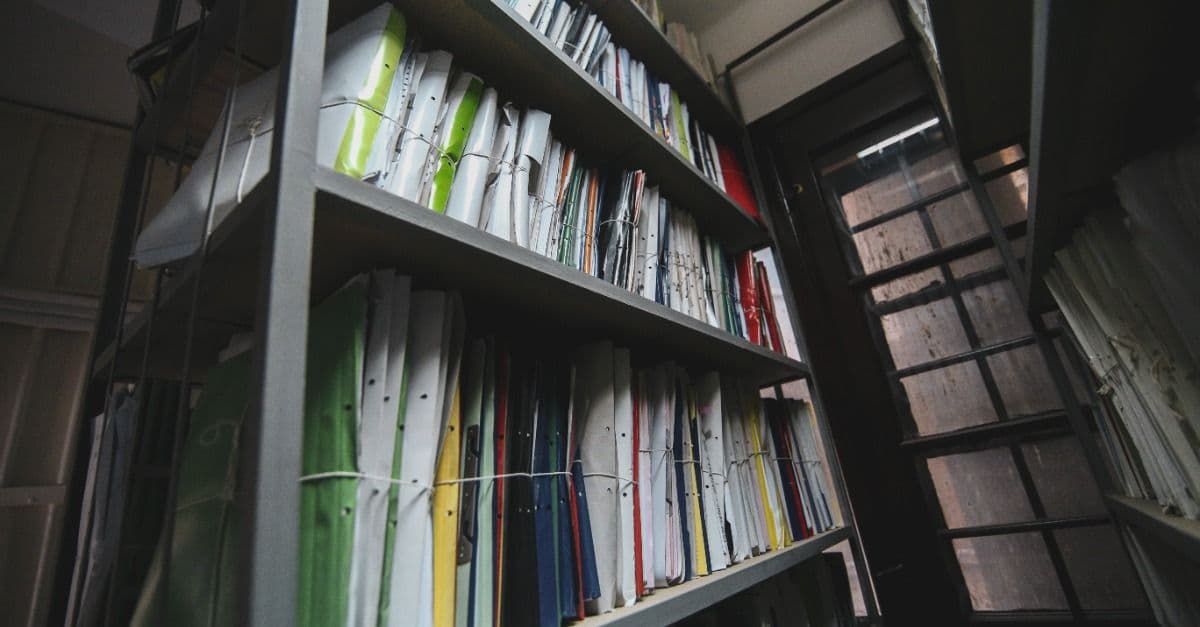
Most businesses are required to retain records long after anyone needs to look at them. Tax records, employment files, contracts, and client records accumulate into filing cabinets that consume expensive office square footage while being opened perhaps twice a year.
A small climate-controlled unit is a reasonable home for them. A few practical points:
- Choose climate-controlled for paper. Repeated heat and cold cycling degrades paper and the adhesives in bindings and labels faster than stable conditions do. Our climate-controlled units hold a steady temperature range year-round.
- Use uniform, labeled boxes. Standard bankers boxes stack predictably and let you build a real index. Mismatched boxes make retrieval miserable.
- Keep a manifest outside the unit. A spreadsheet listing box numbers and contents turns a two-hour search into a five-minute trip.
- Get things off the floor. Pallets or shelving under the bottom row. Concrete slabs sit at ground temperature and stay cooler than the surrounding air.
- Know your retention schedule. Storing records past their required retention period costs money and increases what you'd have to produce in a discovery request. Purge on a schedule.
Regulated records
If you handle records governed by HIPAA, FINRA, or similar frameworks, those rules carry specific custody and access requirements. A self storage unit may or may not satisfy them depending on your obligations. That's a question for your compliance counsel — we can't advise on it, and we'd rather say so than guess.
Choosing a Size
Our units run from 5x5 up to 40x20. Rough guidance for business use:
Unit size | Roughly holds | Common business use |
|---|---|---|
5x5 | ~15–20 bankers boxes, or a small stack of samples | Document archive, sales samples, seasonal decor |
5x10 | A few filing cabinets plus boxes | Records storage, small e-commerce inventory, marketing materials |
10x10 | Contents of a small office, or a shelved inventory room | Growing online retail, office downsizing, trade show gear |
10x15 | An office suite's furniture, or a well-shelved stock room | Full office relocation, mid-size inventory, staging furniture |
10x20 | A one-car garage's worth of equipment | Contractor equipment, event and catering gear, larger inventory |
10x30 and larger | Large equipment, vehicles, or heavy pallet inventory | Landscaping fleets, trailer storage, full retail location contents |
20x20 to 40x20 | Our largest spaces | Multi-vehicle, heavy equipment, full commercial relocations |
Two sizing notes specific to business use. First, shelving changes the math substantially — an unshelved unit wastes most of its vertical space, and free-standing racking often means a 10x10 does the work of a 10x15. Second, build in headroom if you're growing; moving inventory between units mid-season costs a day you probably don't have.
Our storage unit size guide has detailed breakdowns of each size.
Setting Up a Business Unit That Actually Works
- Rack it before you fill it. Free-standing shelving installed on day one is far easier than restacking a full unit later. Keep racking free-standing rather than anchored to walls.
- Leave a center aisle. A one-foot aisle to the back wall costs a little square footage and saves you from unloading the front of the unit every visit.
- Heaviest and least-accessed at the back. Fast-moving stock stays near the door.
- Label toward the aisle, and label big. Lighting inside a unit is functional, not generous.
- Keep the manifest in the cloud. A shared spreadsheet means anyone on your team can tell what's in the unit without driving there.
- Photograph the layout after setup. Useful for training, for insurance, and for remembering where things went.
What a Storage Unit Can't Do for Your Business
Being direct about the limits here saves everyone a bad rental:
- We can't accept deliveries. Our facilities have no staff on site, so there is nobody to receive freight, sign for a carrier delivery, or accept a pallet. Anything going into your unit has to be brought there by you or someone you send.
- You can't operate out of the unit. Storage units aren't workspaces. No staff working inside, no customers meeting you there, no manufacturing, assembly, or repair work in the unit.
- Units are not powered. There are no electrical outlets in units, so nothing that needs to run — coolers, chargers, compressors, servers — can be plugged in.
- A unit isn't a business address. You can't register a business, receive mail, or list a storage unit as a place of business.
- One party holds each rental. Each unit is leased to exactly one party, and that leaseholder is responsible for the access credentials and everything stored inside. If several people on your team need access, that access runs through the leaseholder.
- No hazardous or flammable materials. Fuel, solvents, paint, propane, chemicals, and pressurized cylinders are prohibited — a meaningful constraint for trades and landscaping in particular.
- No food product. Including sealed and canned goods. It attracts pests.
Insuring Business Inventory
A protection plan is required at checkout for every rental, and it carries a coverage ceiling. For a document archive that's usually adequate. For a unit holding a season's inventory or a contractor's equipment, it very often isn't.
If the contents of your unit are worth more than the plan covers, talk to whoever writes your commercial policy about off-premises coverage or a rider. Many business owner's policies extend some coverage to property stored off-site, though limits are frequently lower than owners expect. Worth confirming the number before you find out the hard way.
Multiple Units and Multiple Markets
10 Federal Storage operates more than 130 facilities across 16 states. For businesses working across a region, that footprint has some practical uses: territory inventory positioned near the routes that need it, staging materials held near active markets rather than shipped from a central warehouse, and equipment stored close to where a seasonal crew actually works.
Because everything is handled online through one account, adding a unit in a new market doesn't require a relationship with a new facility, a site visit, or a phone call — the process is the same one you already used.
Business Storage FAQs
No. Our facilities are unstaffed, so there's nobody available to accept freight or sign for a carrier delivery. Everything stored in your unit needs to be brought there by you or someone you send.
Each unit is leased to exactly one party, and that leaseholder holds the access credentials and remains responsible for the unit and its contents. Any access by others runs through the leaseholder.
No. Storage units are for storage. Working from the unit, meeting customers there, or conducting assembly, repair, or manufacturing inside it isn't permitted.
No, our units aren't equipped with electrical outlets. Anything requiring power can't be plugged in or operated inside a unit.
Storage rented for legitimate business purposes is generally treated as a deductible business expense, but how that applies to your situation depends on your business structure and how the unit is used. We're not tax advisors — check with your accountant.
It varies widely by use. Document archives commonly fit a 5x5 or 5x10. E-commerce inventory typically starts around a 10x10. Contractor equipment usually needs a 10x20 or larger. Shelving makes a substantial difference — a well-racked unit holds far more than an unracked one of the same size.
For paper records, electronics, and anything with adhesives or finishes, yes — a stable temperature range is worth the premium, particularly for long-term storage. For tools, equipment, and durable materials, a standard drive-up unit is usually the better value.
Many locations offer parking spaces and larger units suitable for work vehicles and trailers. Availability varies by facility, and vehicle storage carries its own requirements — see our vehicle storage page for details.
No. All rentals are month-to-month, which is why seasonal businesses tend to find the model workable — you're not carrying an empty unit through the off-season.
Entirely online. Find a location, choose a unit size, sign the lease, and receive your gate access code. There's no office to visit and no appointment to schedule. A free lock is waiting in your unit at move-in.
Find Business Storage at Your Nearest 10 Federal Storage Facility
Take back the organization within your business with a self storage unit near you. With plenty of great features and numerous locations, storage at 10 Federal cannot be beat in terms of convenience. Find your nearest 10 Federal Storage facility today!